Table of Contents
- 1. Muse launches business calling for paid subscribers
- 2. What new feature does Meta’s Muse offer to subscribers?
- 3. When was the calling feature for U.S. businesses tested and made available?
- 4. What are the subscription plans for Muse and their token limits?
- 5. How do Muse’s calling capabilities compare to other AI agents?
- 6. Why do businesses often hang up on calls from AI agents?
- 7. What frustrations does the Muse calling feature aim to alleviate?
- 8. Will free users have access to any new features related to Muse?
- 9. Conclusion on Muse’s Business Calling Feature
- 9.1 The Future of AI in Customer Service
- 9.2 Ensuring Ethical AI Deployment
Muse launches business calling for paid subscribers
- Meta says Muse can now place calls to U.S. businesses on a user’s behalf, but only for paying subscribers.
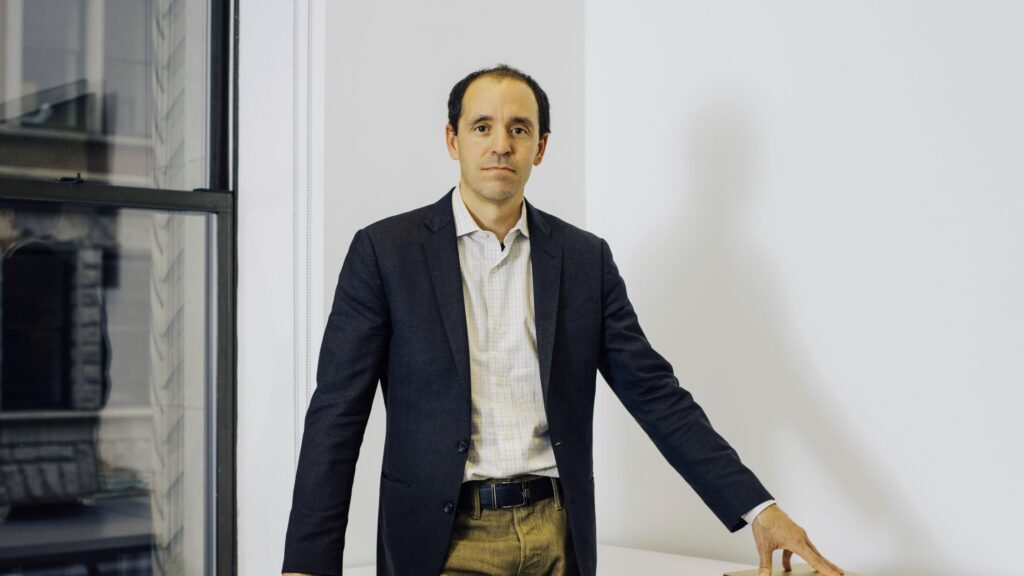
- Meta’s chief AI officer Alexandr Wang says the feature targets calls people avoid, like the DMV, cable companies, or restaurants without online booking.
- Meta says Muse plans start at $20/month (500 million tokens/week) and go up to $100/month (3 billion tokens).
- TechCrunch reports businesses may hang up once they realize a caller is an AI agent, even as synthetic voices get more humanlike.
What new feature does Meta’s Muse offer to subscribers?
Meta has added a practical, old-school capability to its consumer AI agent: Muse can now place outbound phone calls to U.S. businesses on behalf of users, according to TechCrunch.
The pitch is straightforward: a personal agent that can take one more annoying task off your list. Meta has been trying to make consumer AI feel less like a novelty and more like a daily utility, and phone calls are a high-friction part of modern life that still hasn’t been fully replaced by apps and web forms. Muse has “over 10 million users,” a scale that helps explain why Meta is pushing features that move beyond chat and into real-world actions.
Alexandr Wang, Meta’s chief AI officer and head of its Superintelligence Labs division, framed the calling feature as a way to handle the calls people don’t want to make. In comments reported by TechCrunch, he pointed to examples like calling a cable company, the DMV, or a restaurant that doesn’t offer online reservations.
In other words, Muse isn’t just answering questions—it’s acting as an intermediary in the messy, time-consuming parts of customer service and scheduling that still depend on voice calls.
When was the calling feature for U.S. businesses tested and made available?
Meta tested Muse’s business-calling feature in September before broadening access, according to TechCrunch. During that initial phase, the feature wasn’t simply “on” for everyone: TechCrunch reports that only a select number of early adopters could try it, and they did so after asking Muse for access.
That kind of gated rollout is typical for features that touch sensitive surfaces—like phone networks and real businesses—because the failure modes are public. A buggy chatbot is annoying; a buggy calling agent can waste a business’s time, confuse a reservation book, or create reputational blowback fast.
Now, Meta says the feature is available to anyone who pays for Muse. That shift—from a request-based early access group to general availability for subscribers—signals Meta believes the feature is stable enough to scale, at least within the paying tier.
The timeline also matters for expectations: this is not a long-running, mature capability that has been refined for years in the open. It’s a newly expanded feature that moved from a limited test in September to broader paid availability by November 2026, per TechCrunch’s reporting.
That sequencing—test first, then subscriber access—matches Meta’s description of the feature evolving from early access to a paid tier.
What are the subscription plans for Muse and their token limits?
Muse’s calling feature sits behind a paywall. Meta’s Muse subscription plans start at $20 per month and include 500 million Muse tokens per week, according to TechCrunch. For heavier users, Meta offers a higher tier at $100 per month with 3 billion tokens.
TechCrunch frames these as subscription plans (not one-off add-ons), with weekly token allowances that govern overall Muse usage.
Those token limits matter because they define how much “work” Muse can do in a given week across tasks—not just calling. While Meta hasn’t detailed in TechCrunch’s report exactly how many tokens a typical call consumes, the structure implies that calling is part of a broader usage-based system rather than a flat “unlimited calls” promise.
The pricing also positions Muse as a premium consumer agent rather than a casual add-on. A $20/month entry point is in the range of other paid AI subscriptions, but the $100/month tier suggests Meta is also targeting power users who want the agent to take on frequent, time-consuming tasks.
Muse’s calling capability is “paid-only” for now—an important constraint given that Meta says Muse has reached a user base of more than 10 million. In practice, that means the headline feature is available to a subset of that audience: the people willing to subscribe.
How do Muse’s calling capabilities compare to other AI agents?
Muse is entering a competitive lane rather than inventing it. TechCrunch reports that Muse is not the only AI agent that can place calls to businesses: the startup Instinct offers a similar option, and Google’s Gemini does as well.
The differentiator, at least in Meta’s framing, is less about whether calls are possible and more about whether a consumer agent can make them feel routine—like sending a message or setting a reminder. Meta’s broader goal is to make consumer AI “a mainstream product for everyday users,” TechCrunch reports, and calling is one of the actions that can make an agent feel genuinely useful rather than purely conversational.
But the comparison also highlights a shared industry constraint: capability doesn’t guarantee acceptance. TechCrunch notes that even if these tools can handle the task, “the reception on the other end of the line can be mixed.” That’s a key point when comparing agents: the hard part isn’t only speech synthesis and dialogue management—it’s getting businesses to treat the call as legitimate.
In TechCrunch’s framing, this is an adoption and trust problem as much as a product capability problem.
TechCrunch adds another wrinkle that affects all competitors: as AI gets better at mimicking human voices, it will become harder for businesses to tell whether they’re speaking to a customer or an AI acting on the customer’s behalf. That raises the stakes for trust, disclosure, and call handling norms across the entire category, not just Muse.
Why do businesses often hang up on calls from AI agents?
The immediate problem is social, not technical: many businesses and receptionists hang up as soon as they identify that a caller is an AI agent, according to TechCrunch.
There are several implied reasons behind that behavior, all rooted in incentives and risk. Front-desk staff are trained—formally or informally—to filter out spam, robocalls, and scams quickly. An AI voice can sound like one more automated nuisance, especially when businesses are already overloaded with unsolicited calls. If the staff member believes the call won’t lead to a real sale, reservation, or resolved issue, hanging up is the fastest way to protect time.
TechCrunch also points out that this dynamic may get more complicated, not less. As AI becomes better at mimicking a real human voice, it will be tougher to tell the difference between a customer and an AI working on the customer’s behalf. That could reduce hang-ups in the short term—because detection becomes harder—but it also raises the possibility of more suspicion overall if businesses feel they’re being “tricked” into engaging.
In other words, the hang-up problem is partly about identification. If the call is clearly AI, some businesses disengage immediately. If it’s not clearly AI, businesses may later feel misled—potentially prompting new policies, scripts, or even blanket blocking of certain call patterns.
What frustrations does the Muse calling feature aim to alleviate?
Meta is betting that phone calls remain one of the most hated chores in modern customer life. TechCrunch describes the state of customer service that many consumers have “grown frustrated” with over the years: complex phone trees, long holds, and the roulette of whether the first human who answers can actually help—or just transfers you to another department.
That’s the pain Muse is designed to absorb. Wang’s examples, as reported by TechCrunch—calling the cable company, the DMV, or a restaurant without online reservations—are all situations where the caller often expects friction: waiting, repeating information, navigating menus, and negotiating with systems designed to manage volume rather than delight customers.
The promise is not that Muse magically makes customer service better. It’s that it can sit through the worst parts with “infinite patience,” as TechCrunch puts it, and only pull the user in when needed. If the agent can successfully complete the call end-to-end, the user saves time and avoids stress. If it can’t, the user at least offloads the initial waiting and triage.
This is also why calling is a meaningful step beyond chat. A chatbot can draft an email complaint. A calling agent can deal with the reality that many organizations still route critical actions—cancellations, appointment changes, billing disputes—through voice channels that are intentionally hard to navigate.
Will free users have access to any new features related to Muse?
The calling feature remains paid-only “for the time being,” according to TechCrunch. But Meta is not keeping every new capability locked behind a subscription.
TechCrunch reports that Muse recently added an option to create a Muse email address, and that this feature will “soon roll out to free users,” according to Wang.
That distinction is important: Meta appears to be splitting features into two buckets. High-cost, high-risk actions—like placing calls to businesses—are reserved for subscribers. Lower-risk identity or utility features—like an email address tied to Muse—can be used to broaden adoption and keep free users engaged.
It also suggests Meta is still experimenting with what “free Muse” should be. Even small feature upgrades for free users can shift behavior at scale—while premium features like calling become the lever to convert a portion of that base into paying customers.
Conclusion on Muse’s Business Calling Feature
Meta’s decision to let Muse place calls to U.S. businesses—while restricting it to paid subscribers—signals a push to make consumer AI more action-oriented, not just conversational, as reported by TechCrunch. The feature targets a real pain point: the time sink and frustration of phone-based customer service and scheduling.
The Future of AI in Customer Service
TechCrunch’s reporting underscores the central tension: AI agents may be capable of handling calls, but businesses don’t always welcome them. As synthetic voices improve, the line between “customer” and “agent” will get harder to detect, which could reshape how customer service teams treat inbound requests—regardless of whether they come from Muse, Instinct, or Google’s Gemini.
Ensuring Ethical AI Deployment
Even in TechCrunch’s relatively product-focused framing, one theme stands out: trust on the other end of the line. If businesses routinely hang up on AI callers, the technology’s success will depend not only on better speech and dialogue, but also on norms around identification, consent, and how automated agents should participate in human systems without degrading them.
Scope note: This article summarizes details as reported by TechCrunch, including Meta’s stated pricing, rollout, and positioning of the feature.

I am Martín Weidemann, a digital transformation consultant and founder of Weidemann.tech. I help businesses adapt to the digital age by optimizing processes and implementing innovative technologies. My goal is to transform businesses to be more efficient and competitive in today’s market.
LinkedIn