Table of Contents
- 1. Fund III details
- 2. Overview of Air Street Capital’s $232 Million Fund
- 3. Investment Focus on Early-Stage AI Companies
- 4. Check Sizes and Growth Investments
- 5. Leadership and Structure of Air Street Capital
- 6. Notable Portfolio Companies and Exits
- 7. Assets Under Management and Fund History
- 8. Implications for the European VC Landscape
- 9. Air Street Capital: A New Era in European Venture Capital
- 9.1 The Impact of Solo VC Models on Investment Strategies
- 9.2 Navigating the Future of AI Investments in Europe
Fund III details
- Air Street Capital has closed a $232 million Fund III focused on early-stage AI companies.
- The fund will write checks from $500,000 to $15 million, with select growth investments up to $25 million.
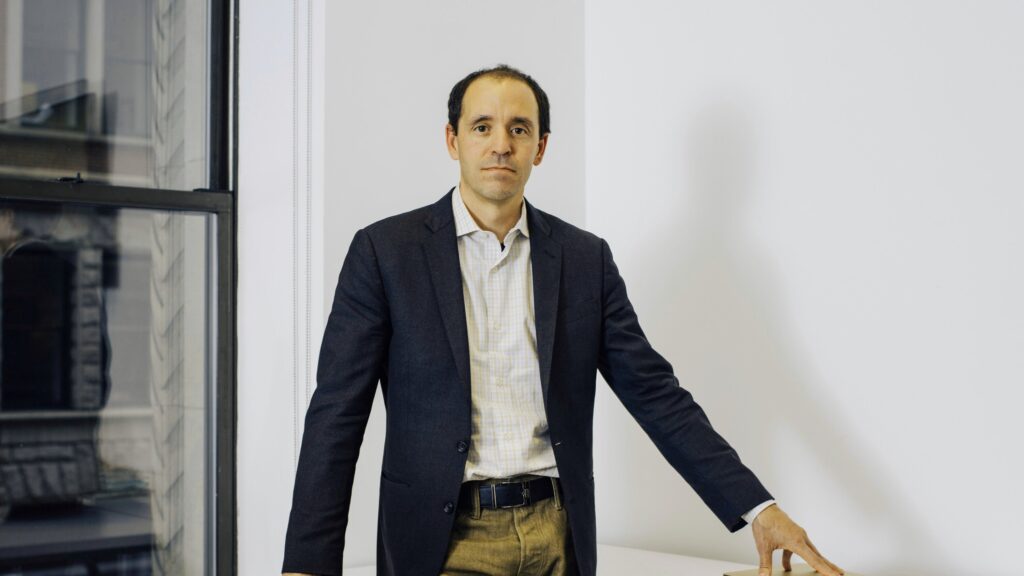
- Led by Nathan Benaich, the raise positions Air Street among Europe’s largest solo-GP venture funds.
- Air Street’s track record includes backing AI unicorns such as Black Forest Labs and ElevenLabs, plus exits including Adept (to Amazon) and Graphcore (to SoftBank).
Fund III: Early-Stage AI Investing
– Fund: Fund III
– Fund size: $232 million
– Stage focus: early-stage AI companies
– Check sizes: $500,000 to $15 million
– Select growth checks: up to $25 million
– Geography: Europe and North America (“both sides of the Atlantic”)
– Lead GP: Nathan Benaich (solo-GP model)
– Reported firm scale: about $400 million in assets under management
Overview of Air Street Capital’s $232 Million Fund
Air Street Capital has raised a $232 million third fund aimed squarely at early-stage artificial intelligence companies. The announcement places the firm in rare territory: a specialist AI investor operating at a scale more commonly associated with multi-partner platforms, but led by a single decision-maker.
Solo-Led Fund, Bigger Impact
A $232 million raise is notable here less because it’s “big for venture” and more because it’s big for a specialist, solo-led European fund. In practice, that combination can change how early-stage rounds get led (fewer cooks, faster conviction) and how long a single investor can stay involved (more reserves for follow-ons).
The new vehicle—Fund III—also underscores how quickly capital has concentrated around managers with a clear thesis in AI. Air Street’s pitch is not broad “tech” exposure; it is a deliberate bet that AI-first companies, backed early and supported through multiple rounds, can compound technical advantage into durable businesses.
Fund III’s size matters for another reason: it changes what “early-stage” can mean in practice. With the ability to lead rounds and reserve capital for follow-ons, Air Street can support companies as they move from research-heavy beginnings into commercialization—without forcing founders to immediately stitch together a long syndicate.
The firm has said the fund will be deployed on both sides of the Atlantic, reflecting the reality that AI talent, customers, and capital markets are deeply interconnected. For founders, that geographic scope can translate into earlier access to networks and market pathways beyond their home region.
Just as importantly, the fund close is a signal from limited partners that a focused, solo-GP model can attract institutional-scale commitments—at least when paired with a recognizable portfolio and realized exits.
Investment Focus on Early-Stage AI Companies
That cross-regional mandate is notable in a market where many European funds remain primarily Europe-only, while the largest U.S. firms often dominate later-stage financing. Air Street is positioning itself as a bridge: early conviction in Europe, with the ability to engage in North America as companies scale.
The firm’s emphasis is “AI-first”—a framing that implies AI is not a feature bolted onto an existing product, but the core driver of differentiation. In practice, Air Street’s existing portfolio points to a preference for foundational and technically ambitious companies, including generative AI and other deep-tech applications.
Defining an AI-First Advantage
A practical way to read “AI-first” in this context:
– Core differentiation: the product’s edge comes primarily from models/data/learning systems, not just UI or distribution.
– Technical risk up front: meaningful R&D or engineering uncertainty exists early (and is part of the bet).
– Compounding advantage: performance, cost, or capability improves with more data/usage/iteration.
– Clear path to a business: a credible route from research to repeatable deployment (enterprise, developer tooling, infrastructure, regulated verticals, etc.).
The portfolio examples named in this article (e.g., generative tooling, autonomy, life sciences) fit this pattern because the AI system itself is central to what the company sells.
Examples from its portfolio include Synthesia (enterprise AI video generation), Wayve (self-driving technology), Profluent (AI-driven gene editing), Black Forest Labs (generative AI), and ElevenLabs (voice synthesis). The spread across sectors—media, autonomy, life sciences, and core generative tooling—suggests Air Street is not confined to a single vertical, but is consistent about the underlying AI intensity.
This focus also aligns with broader European AI dynamics: the region has produced high-quality research and engineering talent, but scaling companies to global dominance has historically been harder. By concentrating on early-stage AI, Air Street is effectively betting that the next wave of globally relevant companies can be identified before they become obvious—and before pricing is set by mega-funds.
At the same time, the firm’s strategy implicitly acknowledges that AI is capital-hungry. Even at seed and Series A, compute, talent, and go-to-market costs can be substantial. A $232 million fund gives Air Street room to lead, follow, and selectively double down—rather than acting as a small check in crowded rounds.
Check Sizes and Growth Investments
Air Street says Fund III will invest with check sizes ranging from $500,000 to $15 million, with select growth investments reaching up to $25 million. That range is wide enough to cover the earliest institutional rounds as well as later, higher-conviction financings—without requiring a separate growth fund.
Investment Stages by Check Size
How the check-size range typically maps to stages (and what to sanity-check):
1) Entry (around $500k–$2m): early conviction before product-market fit is fully proven.
– Checkpoints: clear technical wedge, credible team, and a plan for compute/talent burn.
2) Lead/anchor (often $2m–$15m): setting the pace for hiring, compute spend, and commercial expansion.
– Checkpoints: measurable product progress, early customer pull (or strong pilot pipeline), and realistic unit economics for inference/training.
3) Select growth (up to $25m): doubling down to maintain ownership and support scaling through inflection points.
– Checkpoints: evidence the business is scaling (revenue, usage, deployments), plus clarity on competitive moat and capital needs.
Because the same fund can do all three, the practical question becomes: how much is reserved for follow-ons versus new deals—and how concentrated the biggest bets become.
At the low end, a $500,000 check can function as a seed entry point, allowing Air Street to back a company before product-market fit is fully proven. At the high end of the core range, $15 million can anchor a substantial round—often the kind that sets direction for hiring, compute spend, and commercial expansion.
The “select growth investments” up to $25 million are particularly telling. They suggest Air Street wants the option to keep ownership and influence as winners emerge, rather than being diluted out by larger, later-stage investors. In AI, where the path from breakthrough to business can be nonlinear, the ability to continue funding a company through inflection points can be decisive.
This structure also changes the firm’s relationship with founders. A fund that can write both early and later checks can credibly promise continuity: the same investor who backed the initial technical vision may still be present when the company is negotiating major partnerships or scaling internationally.
Of course, larger checks also raise the stakes for underwriting discipline. A solo-GP fund writing up to $25 million into a single company is making a concentrated bet—one that depends on the investor’s ability to assess not only technology, but also timing, market structure, and execution risk.
Still, the check-size policy fits the broader narrative: Air Street is building a platform that behaves like a specialist with depth, not a generalist with breadth.
Leadership and Structure of Air Street Capital
Air Street Capital is led by Nathan Benaich, and Fund III’s close makes the firm one of Europe’s largest “solo VC” funds—meaning a single general partner is the primary decision-maker. In an industry where many firms rely on investment committees and multiple partners to spread responsibility, the solo model is both a differentiator and a structural risk.
Solo GP: Speed vs Resilience
What the solo-GP structure tends to trade:
– Gains: faster decisions, a consistent thesis, clearer accountability, and often a tighter founder relationship.
– Costs: more key-person risk, potential bandwidth constraints (diligence + board work + follow-ons), and fewer internal “second opinions” on technical or market calls.
At this fund size, the upside is the ability to lead and support winners; the downside is that a few large, high-conviction decisions can have an outsized impact on outcomes.
The upside is speed and coherence. Without a multi-partner negotiation behind every decision, a solo GP can move quickly, maintain a consistent thesis, and build direct founder relationships without internal politics. For early-stage AI companies—where timing, technical nuance, and conviction matter—this can be attractive.
The trade-off is concentration. Decision-making, portfolio construction, and ongoing support are heavily dependent on one person’s judgment and bandwidth. In a fast-moving AI market, where new architectures, products, and competitive dynamics can shift quickly, that concentration can be either a strength (clarity) or a vulnerability (single point of failure).
Fund III also arrives as Air Street’s profile rises through both portfolio visibility and exits. That matters because the solo model often relies on reputation and trust: limited partners must be comfortable that one investor can source, select, and support enough high-quality opportunities to deploy a large pool of capital responsibly.
Air Street’s structure also interacts with its transatlantic strategy. Investing across Europe and North America expands opportunity, but it also expands the surface area of relationships and diligence. The firm is effectively asserting that a focused thesis—AI-first—can keep that complexity manageable even as geography broadens.
In Europe, where venture has historically been more fragmented by country and language, a solo GP operating at this scale is still unusual. Fund III therefore functions as a test case: whether specialization and a single, recognizable investor brand can compete with larger partnerships for the best AI deals.
Notable Portfolio Companies and Exits
Air Street’s credibility in raising a $232 million fund rests heavily on what it has already backed—and what it has already returned. The firm has invested in several high-profile AI companies, including AI unicorns Black Forest Labs and ElevenLabs, according to reporting on the fund.
Other notable portfolio companies include Synthesia, known for enterprise AI video generation; Wayve, focused on self-driving technology; and Profluent, which applies AI to life sciences, including gene editing. Taken together, these bets map to some of the most commercially active and technically demanding areas of AI.
Exits matter even more in a market where liquidity has been uneven. Air Street has seen exits from Adept, which was sold to Amazon, and Graphcore, which was sold to SoftBank. Those outcomes provide tangible proof points that the firm can identify valuable AI assets early enough to matter—and that strategic buyers are willing to pay for AI capabilities, whether in software research or hardware infrastructure.
| Company | Category (as described) | Status / outcome (as described) |
|---|---|---|
| Black Forest Labs | Generative AI | AI unicorn; portfolio |
| ElevenLabs | Voice synthesis | AI unicorn; portfolio |
| Synthesia | Enterprise AI video generation | Portfolio |
| Wayve | Self-driving technology | Portfolio |
| Profluent | AI-driven gene editing | Portfolio |
| Adept | AI research | Exit: sold to Amazon |
| Graphcore | AI semiconductors / compute stack | Exit: sold to SoftBank |
The Graphcore exit is also a reminder that AI is not only about models and applications; it is also about the compute stack. Meanwhile, Adept’s sale to Amazon highlights the appetite among hyperscalers and platform companies to acquire AI talent and technology rather than build everything internally.
For founders, a portfolio like this can be a recruiting tool: it signals that Air Street is already embedded in the AI ecosystem and can help companies connect to later-stage investors, partners, and potential acquirers. For limited partners, it provides evidence that the firm’s AI-first thesis has produced both headline companies and realizations.
In a sector where hype can outpace outcomes, these portfolio markers help explain why Air Street could scale Fund III so dramatically relative to its earlier vehicles.
Assets Under Management and Fund History
Air Street’s Fund III is the latest step in a rapid fundraising trajectory. The firm raised $17 million for Fund I in 2020, then expanded to a $121 million Fund II, and has now closed Fund III at $232 million. With this raise, Air Street now has about $400 million in assets under management, according to reporting cited by the Financial Times.
| Fund | Year (as stated) | Fund size (as stated) | Notes (as stated) |
|---|---|---|---|
| Fund I | 2020 | $17 million | First fund |
| Fund II | — | $121 million | Prior fund before Fund III |
| Fund III | — | $232 million | Current fund |
| Firm AUM | — | about $400 million | Reported AUM figure |
That growth is striking not only in absolute terms, but in what it implies about investor appetite for specialization. Many venture firms broaden their mandate as they raise larger funds. Air Street, by contrast, has remained tightly associated with AI-first investing—suggesting that limited partners are rewarding focus rather than diversification.
The step-up from $121 million to $232 million also changes the firm’s operating posture. Larger funds typically require a careful balance between maintaining early-stage access and deploying enough capital efficiently. Air Street’s stated check-size range—down to $500,000—indicates it intends to preserve early entry points even as the fund grows.
At the same time, the firm’s ability to make growth investments up to $25 million suggests it is adapting to the reality that AI companies may need more capital earlier, and that the most valuable ownership is often built through follow-on participation.
The AUM figure—around $400 million—places Air Street in a different category from many boutique European seed funds, while still far smaller than the largest global multi-stage platforms. That middle position can be advantageous: large enough to matter in competitive rounds, but still small enough to remain selective and thesis-driven.
Fund history also provides context for the solo-GP conversation. Scaling from $17 million to $232 million in six years is not just a fundraising story; it is an institutionalization story—one where a single investor’s approach has been validated repeatedly by the market.
Implications for the European VC Landscape
Air Street’s $232 million Fund III lands as both a milestone and a provocation for European venture capital. It is a milestone because it demonstrates that Europe can produce a specialist manager—focused on AI—capable of raising a fund size that makes it one of the region’s largest solo-GP vehicles. It is a provocation because it challenges the assumption that scale requires a traditional partnership structure.
In the context of the broader market, the fund is still small relative to total European venture flows. Reporting cited in external analysis puts European VC investment at $58 billion in 2024, meaning a $232 million fund is a fraction of annual deployment. Yet its influence may be outsized because it targets one of the most competitive categories—AI—and because it can lead rounds with meaningful checks.
| Calibration point | What it helps you understand | What the article reports |
|---|---|---|
| Annual Europe VC flow | How “big” a single fund is versus the whole market | $58B in 2024 (reporting cited in external analysis) |
| Air Street Fund III | The fund’s absolute firepower | $232M |
| Share of annual flow | Why the fund can be influential without being market-dominant | A fraction of annual deployment |
| Structure | Why this fund is discussed as unusual | Solo-GP at institutional scale |
Competition is one immediate effect. A well-capitalized, AI-specialist investor can force generalist funds to sharpen their own AI theses or risk losing the best deals. It can also pressure other European firms to consider whether their own structures—multi-partner committees, slower processes—are a disadvantage in fast-moving technical markets.
The fund also speaks to Europe’s long-running ambition to create globally significant tech companies. External commentary has pointed to structural gaps in the EU’s ability to produce new, homegrown giants at the highest market-cap levels. Air Street’s concentrated bet on AI-first companies is, implicitly, a bet that AI could be the domain where Europe closes some of that gap—if capital, talent, and commercialization align.
Finally, Air Street’s Europe-and-North-America strategy reflects a pragmatic view of scaling. For European founders, global markets are often necessary early. A fund that is comfortable operating transatlantically can help normalize that path—encouraging companies to think internationally from the start, rather than treating U.S. expansion as a late-stage event.
Air Street Capital: A New Era in European Venture Capital
Air Street’s Fund III is not just a larger pool of money; it is a statement about how venture capital in Europe may evolve in the AI era. A solo-GP firm raising $232 million to back AI-first startups suggests that specialization, speed, and a clear worldview can attract serious capital—even in a region historically dominated by smaller, more fragmented funds.
It also raises a practical question for the ecosystem: if AI is moving quickly and concentrating value, do founders benefit more from investors who are broad and committee-driven, or from investors who are narrow, decisive, and willing to underwrite technical risk early?
Air Street is betting that the latter model can work at scale. Whether it becomes a template for others will depend on performance, but the signal is already clear: Europe’s venture market is making room for new structures, not just new funds.
The Impact of Solo VC Models on Investment Strategies
The solo-GP model reshapes incentives and execution. With one person accountable for decisions, the strategy can remain consistent across market cycles—particularly important in AI, where hype waves can distort judgment. It can also shorten the time between first meeting and term sheet, a meaningful advantage in competitive rounds.
But the model concentrates risk. Portfolio construction, follow-on pacing, and even the ability to maintain deep technical diligence across many subfields of AI all hinge on one investor’s capacity. Fund III’s scale amplifies both sides of that equation: it increases the ability to support winners, while increasing the cost of mistakes.
Air Street’s rise suggests that, at least for some limited partners, the benefits—focus, speed, and a recognizable AI brand—outweigh the governance comfort of a multi-partner committee.
Navigating the Future of AI Investments in Europe
Air Street’s new fund arrives amid a European AI market that is active but uneven, with attention often drawn to a handful of mega-deals and standout companies. In that environment, a $232 million specialist fund can play a specific role: identifying early technical teams, leading rounds with meaningful ownership, and helping companies scale across borders.
The bigger challenge is not simply funding experimentation—it is funding the transition from research to durable business. Air Street’s check-size range, including growth investments up to $25 million, suggests it wants to be present through that transition.
If Europe is to produce more globally significant AI companies, it will likely require exactly this kind of continuity: early conviction paired with enough capital to stay involved as the science compounds and the market catches up. Air Street is positioning Fund III as a vehicle built for that long arc.
This perspective is informed by Martin Weidemann’s work building and scaling technology-driven businesses and leading complex digital transformation across fintech, insurtech, payments, logistics, and other regulated, multi-stakeholder environments.
Fund sizes, check ranges, and AUM figures reflect publicly available information and company statements at the time of writing. Market-wide totals (such as annual VC investment) should be treated as directional context rather than precise, audited counts. Figures and details may change as firms update disclosures or as additional public reporting emerges.

I am Martín Weidemann, a digital transformation consultant and founder of Weidemann.tech. I help businesses adapt to the digital age by optimizing processes and implementing innovative technologies. My goal is to transform businesses to be more efficient and competitive in today’s market.
LinkedIn